
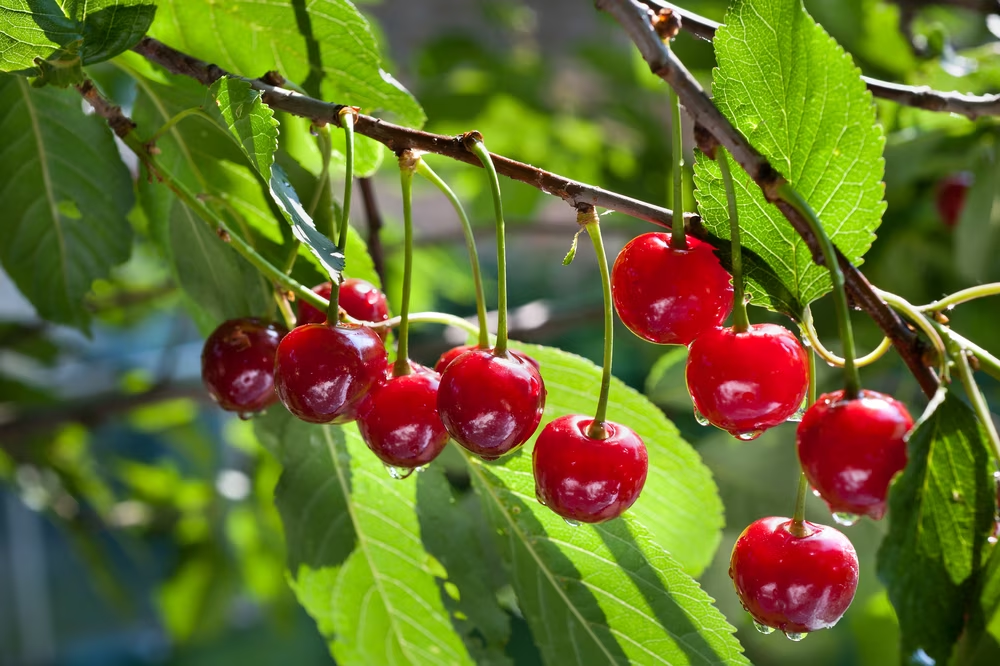
Gardeners with limited space often assume that growing stone fruit is a luxury reserved for those with sprawling country estates or dedicated orchards. This misconception has persisted for decades, largely due to the historical size of traditional cherry trees, which can easily reach heights of twenty feet or more on vigorous rootstocks. However, the landscape of British gardening has shifted dramatically with the introduction of modern dwarfing rootstocks, specifically the Gisela 5. It is now entirely possible to harvest kilogram after kilogram of sweet, dark cherries from a tree that stands no taller than a person. For urban dwellers and those with modest courtyards, the dream of picking fresh fruit from the patio is a realistic and rewarding pursuit.
The secret to this success lies not just in the variety of the cherry but in the engineering of the tree itself. By grafting popular, flavourful varieties onto rootstocks that restrict vegetative growth, nurseries have created trees that focus their energy on fruit production rather than vast timber growth. This revolution means that a small corner of a garden or a substantial container is now sufficient territory for a productive mini-orchard. The following guide explores the four most reliable and distinct varieties for the UK climate, selected for their compact nature, disease resistance, and exceptional flavour profiles.
Insight on Small-Scale Fruit Growing
Navigating the options for small gardens can be overwhelming, but expert advice simplifies the process significantly. The specialists at CRJ Fruit-Trees emphasize that for the amateur gardener working with limited space, the rootstock is just as critical as the fruit variety itself. They note that the Gisela 5 rootstock has been a game-changer for the UK market, allowing trees to remain manageable and productive throughout their lifespan. According to their guidance, the biggest mistake beginners make is underestimating the importance of drainage and pot size when container growing. For those preparing to buy fruit trees for a patio or terrace, they recommend selecting self-fertile varieties to ensure pollination occurs without the need for a second partner tree, which is often a constraint in smaller properties. This pragmatic approach ensures that even a solitary tree can provide a bountiful harvest.
The Reliable Champion: Stella
Stella remains the gold standard against which other self-fertile cherries are measured, and it rightfully claims the first spot on this list. Originating from Canada, Stella was a breakthrough in fruit breeding as the first self-fertile sweet cherry, meaning it does not require a pollination partner to set fruit. This single attribute makes it the ultimate choice for the one-tree garden. When grown on a dwarfing rootstock like Gisela 5, Stella maintains a compact habit, typically reaching a final height of around two metres, making it perfectly suited for a large container or a small border.
The fruit itself is of exceptional quality, producing large, dark red cherries that are sweet, juicy, and resistant to cracking—a common issue in the damp British summer. The harvest usually begins in mid-to-late July, providing a mid-summer treat that bridges the gap between early soft fruits and late-season plums. Beyond the fruit, Stella offers ornamental value. In early spring, the tree is smothered in clouds of white blossom that are not only beautiful but also highly attractive to bees and other early-season pollinators. This dual purpose as both a productive food crop and a decorative garden feature enhances its appeal for small spaces where every plant must earn its keep.
Cultivation of Stella is straightforward, which adds to its popularity among novice gardeners. It is hardy and reliably productive across most of the UK, although, like all cherries, it prefers a sunny, sheltered spot to maximize the sweetness of the fruit. Pruning is minimal when grown on dwarfing stock, usually requiring only a light summer trim to maintain airflow and shape. The tree’s natural resistance to bacterial canker is another significant advantage, reducing the need for chemical interventions. For anyone starting their journey into home fruit growing, Stella provides the most encouraging return on investment, delivering supermarket-quality cherries with very little fuss.
The Flavour Powerhouse: Sunburst
If Stella is the reliable workhorse, Sunburst is the indulgent thoroughbred. Bred from a cross between Stella and Van, Sunburst improves upon its parentage by delivering significantly larger fruit with a flavour profile that is widely considered superior by connoisseurs. The cherries are massive, often weighing over ten grams each, with a skin that turns a deep, glossy mahogany when fully ripe. The flesh is somewhat softer than Stella, melting in the mouth with an intense sweetness that is balanced by a subtle acidity. This is a cherry designed for eating fresh, straight from the tree, warm from the sun.
Sunburst is also a self-fertile variety, eliminating pollination anxieties for the urban gardener. It is particularly noted for its precocity, meaning it starts producing fruit at a very young age—often within the second year of planting. This is a crucial feature for those who want to buy fruit trees and see immediate results rather than waiting half a decade for a harvest. On a compact rootstock, Sunburst forms a neat, spreading tree that is easy to net against birds, which is an essential consideration since the local wildlife will be just as attracted to the high sugar content of the fruit as you are.
While Sunburst is slightly less hardy than Stella in the far north of the UK, it thrives in most English and Welsh gardens, particularly when given a warm, south-facing wall or a sunny patio corner. The large leaves provide excellent shade in the summer, and the autumn colour is a vibrant mix of orange and gold. It is worth noting that because the fruit is softer, it does not store as long as firmer varieties, but given the exquisite taste, it is rare for a harvest to last long enough for storage to be a concern. For the gardener who prioritizes taste above all else and wants a cherry that feels like a gourmet luxury, Sunburst is the undisputed choice.
The Culinary Essential: Morello
No list of top cherries would be complete without addressing the culinary side of the kitchen garden, and Morello is the undisputed king of cooking cherries. Unlike the sweet varieties mentioned previously, Morello is an acid cherry, producing fruit that is tart, complex, and deeply flavoured. While too sharp to be eaten fresh by most, it undergoes a magical transformation when cooked, retaining a rich cherry flavour and firm texture that sweet cherries simply cannot match in pies, jams, and preserves.
The unique advantage of Morello for the small garden lies in its shade tolerance. Sweet cherries demand full sun to develop their sugars, but Morello will crop heavily even on a north-facing wall or in a spot that receives only a few hours of direct sunlight. This makes it an invaluable asset for utilizing “dead space” in a garden that would otherwise be unsuitable for fruit growing. It is also self-fertile and incredibly prolific; a single small tree can easily produce enough fruit to keep a family stocked with cherry jam and pie filling for an entire year.
On a dwarf rootstock, Morello has a naturally weeping, somewhat shrubby habit that is very attractive. It blossoms later than sweet cherries, which often helps it avoid late spring frosts, ensuring a consistent crop year after year. The fruit ripens late, typically in August, and can be left on the tree for some time without deteriorating. For the small garden owner, Morello offers a way to maximize every square inch of available space, turning a shady corner into a productive food factory. Its resilience and reliability make it a favourite among permaculture enthusiasts and traditional cooks alike.
The Resilient Late-Clipper: Lapins
Rounding out the top four is Lapins, also known as Cherokee, a variety that has gained immense popularity for its robustness and late-season harvest. Lapins is another Canadian introduction, bred to be a “universal donor” in terms of pollination, but it is its performance as a standalone tree that makes it exceptional for small UK gardens. It produces large, dark red to nearly black fruits that are firm, resistant to splitting, and possessed of a mild, sweet flavour that appeals to everyone.
The primary strength of Lapins is its resilience. It is one of the hardiest sweet cherries available, tolerating colder, wetter conditions better than many other varieties. This makes it an excellent choice for gardeners in Scotland or exposed areas where more delicate varieties might struggle. Furthermore, it is a late-season ripener, with fruit ready to harvest in mid-to-late August. By planting Lapins alongside an earlier variety like Sunburst, a gardener can effectively extend their fresh cherry season to span nearly two full months.
Lapins has a naturally upright growth habit, which is particularly beneficial for small spaces as it takes up less lateral room than spreading types. When pruned correctly, it can be maintained as a slender pillar of fruit. It is heavily productive, often setting fruit in clusters like grapes, which makes for easy picking. The resistance to rain-induced cracking is a significant technical benefit, saving the crop during typical British summers where August downpours can ruin more sensitive varieties. For the gardener seeking a low-maintenance, tough, and heavy-cropping tree that finishes the summer with a flourish, Lapins is the ideal candidate.
Optimizing Success in Containers
The key to unlocking the potential of these four compact varieties lies in the cultivation method, particularly for those growing in containers. While the Gisela 5 rootstock limits the tree’s size, the gardener must provide the resources the tree needs to thrive in a restricted environment. This begins with the choice of pot; a container of at least 30 to 40 litres is necessary for a long-term home. It is essential to use a loam-based compost like John Innes No. 3, which retains nutrients and moisture far better than peat-based multi-purpose composts that can dry out rapidly in summer.
Watering is the single most critical maintenance task. A cherry tree in a pot has no access to groundwater and is entirely reliant on the gardener. During the fruit-swelling stage in June and July, the tree must be kept consistently moist but not waterlogged. Inconsistent watering can lead to fruit drop or splitting, undoing months of patience. A regular feeding regime is also vital; a high-potash feed, such as a liquid seaweed or tomato fertilizer, applied every two weeks from blossom until harvest, will support the development of sugars and fruit size.
Pruning stone fruit requires a specific schedule different from apples and pears. To avoid the risk of silver leaf disease and bacterial canker, cherries should never be pruned in winter. All shaping and size control must be done in the summer, ideally immediately after the fruit has been harvested. For compact trees, this usually involves pinching out new shoot tips to encourage fruiting spurs and removing any branches that are crossing or rubbing. This summer pruning also helps to restrict the tree’s size, keeping it within the bounds of its designated space.
Pollination and Wildlife Integration
Even with self-fertile varieties like Stella, Sunburst, Morello, and Lapins, the role of local biodiversity cannot be overstated. Fruit set depends heavily on the presence of pollinators. In a small urban garden, encouraging bees is part of the fruit-growing process. planting companion plants such as lavender, borage, or chives near the base of the cherry tree can increase the traffic of pollinators, ensuring that every blossom has the best chance of becoming a cherry. This integrated approach turns the fruit tree into the centrepiece of a micro-ecosystem.
Birds are the primary competition for the harvest. As the fruit begins to colour, it is often necessary to net the tree. The compact size of these varieties makes this task simple; a lightweight net can be draped over the tree and secured at the trunk without the need for ladders or complex frames. This accessibility is one of the main arguments for choosing compact trees; the ease of management transforms fruit growing from a chore into a pleasure. There is no need for dangerous climbing or specialized equipment, just a simple routine of care that yields delicious results.
The value of a Home Orchard
The decision to introduce a fruit tree into a small garden is an investment in both lifestyle and landscape. Beyond the obvious benefit of free, chemical-free produce, these trees offer structure, seasonal interest, and a tangible connection to the seasons. The blossom in April marks the true arrival of spring, the leaf cover provides summer screening, and the harvest offers a ritual of gathering that is rare in modern life.
By selecting one of these top four varieties—Stella for reliability, Sunburst for flavour, Morello for cooking, or Lapins for resilience—gardeners can bypass the common pitfalls of fruit growing. These trees have been bred and selected to succeed in exactly the kind of spaces that were once thought unsuitable for orchards. They prove that you do not need acres of land to be a fruit grower; you only need the right knowledge, the right rootstock, and a little bit of patience.
Ultimately, the best time to start is now. Whether you are looking to buy fruit trees to frame a doorway or to create a productive hedge along a fence line, the modern compact cherry offers a solution that is as practical as it is delicious. The satisfaction of walking out your back door and picking a handful of sun-warmed cherries is an experience that transforms the perception of what a small garden can be. It is a shift from viewing the garden merely as an outdoor room to viewing it as a productive, living landscape that feeds both the family and the soul.
Conclusion
The evolution of the compact cherry tree has democratized fruit growing in the UK. No longer the preserve of large estates, high-quality stone fruit is now accessible to anyone with a patio or a small patch of earth. The combination of the Gisela 5 rootstock with superior varieties like Stella, Sunburst, Morello, and Lapins has removed the barriers of size and complexity. These trees are manageable, productive, and perfectly adapted to the British climate.
Success requires only a adherence to the basics: good soil, consistent water, and summer pruning. In return, these trees provide years of harvests, beautiful blossoms, and the unbeatable taste of home-grown fruit. For the small garden owner, there is perhaps no better use of space than a tree that offers so much in return for so little room. The era of the patio orchard has arrived, and it tastes exceptionally sweet.
